STEP 01
Move the beads
Children learn to represent numbers and calculate by moving beads on a physical Abacus.
A hands-on calculating tool that helps children understand numbers, practise arithmetic and gradually move toward mental calculation.
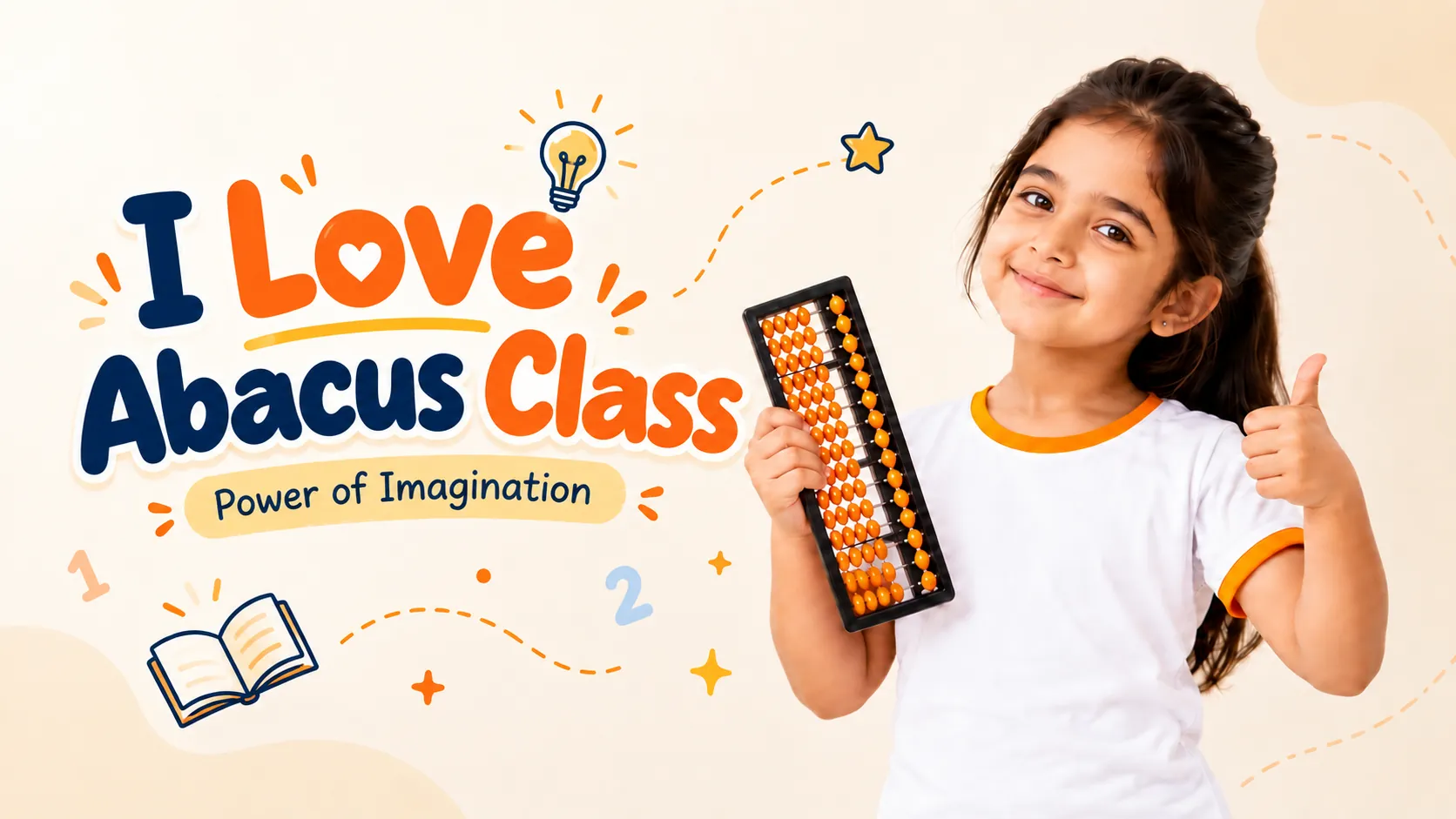
An Abacus is a frame of beads arranged on rods. Children use the beads to represent numbers and carry out calculations. With repeated practice, many learners begin to visualise the bead movements mentally.
Modern Abacus education uses the physical tool as a learning foundation. The important progression is not just moving beads, but understanding number relationships, practising accurately and gradually reducing dependence on the physical frame.
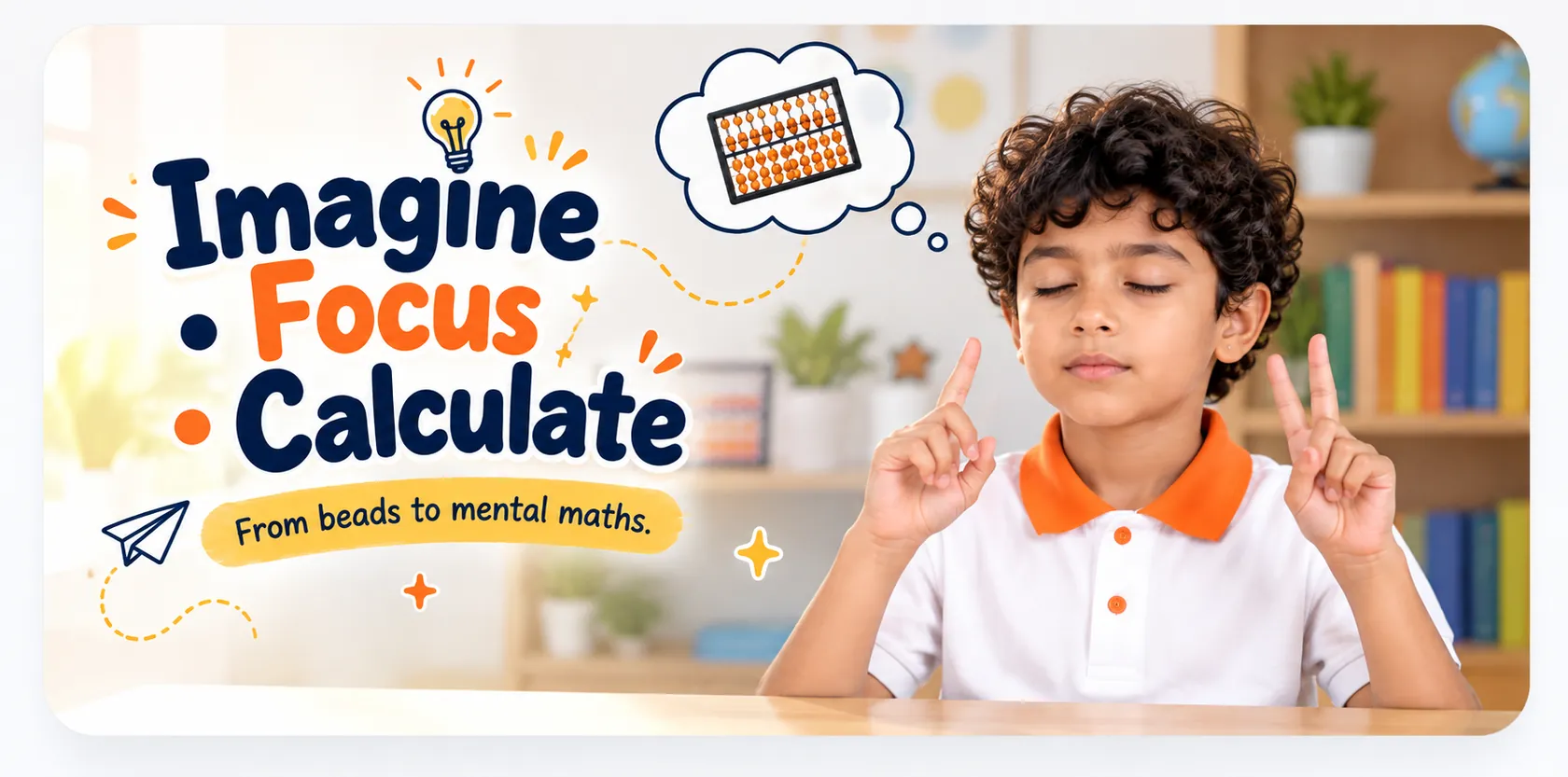
The learning journey is progressive: first touch and move, then visualise, then calculate with less dependence on the physical tool.
Children learn to represent numbers and calculate by moving beads on a physical Abacus.
With guided practice, learners begin visualising bead positions instead of relying only on the tool.
The goal is to solve calculations by mentally visualising the Abacus and its bead movements.
The physical frame of beads. It gives children a concrete way to represent numbers and practise calculation with their hands.
The ability to calculate mentally. In Abacus learning, this can involve visualising the Abacus and mentally moving imagined beads.
In short: the Abacus is the tool; mental calculation is the skill.
Abacus practice combines visual, tactile and arithmetic activity. Research on Abacus training has explored possible effects on attention, working memory and numerical processing, but outcomes vary by learner, training intensity and study design.
Join live teacher-led Abacus classes from home with structured practice and the Mastermind digital learning ecosystem.
Learn in person at an available Mastermind Abacus Bangladesh branch and get local class support.
Find a Branch →