From marks, stones and counting surfaces
Long before the modern bead frame, people used marked surfaces, counters and stones to keep track of quantities and calculations.
Follow the evolution of counting boards, the Chinese suanpan and the Japanese soroban — and see how the physical Abacus became a foundation for modern visual calculation practice.
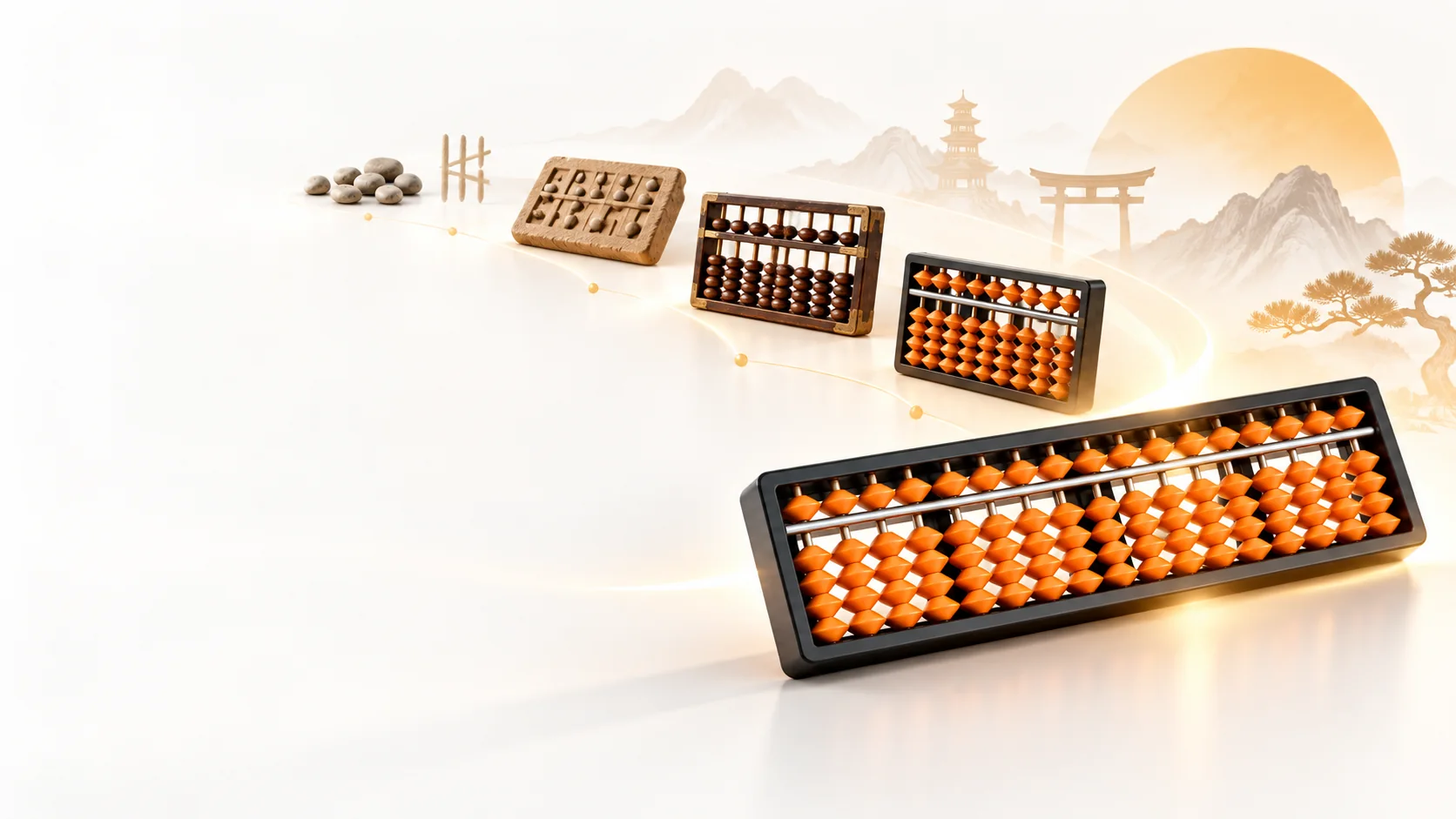
The Abacus did not appear in one single form or place. Early civilisations used counting surfaces and movable counters; later bead-frame systems developed in Asia. Over centuries, those designs became faster, more compact and easier to operate.
The modern soroban is especially important to Abacus education because its streamlined layout supports quick, consistent bead movement and lends itself naturally to mental visualisation.
The English word abacus came through Latin and Greek forms associated with a board or calculating surface. Its exact deeper linguistic origin is debated, but the name reflects the earliest idea well: a surface on which quantities were arranged and manipulated.
Different cultures reshaped the same basic idea: represent numbers physically, move them efficiently and make calculation easier to follow.
Long before the modern bead frame, people used marked surfaces, counters and stones to keep track of quantities and calculations.
Greek and Roman counting boards used ruled positions and movable counters, making place-based calculation more systematic.
Chinese bead-frame designs developed into the suanpan, a flexible calculating tool used for a wide range of arithmetic operations.
Japan refined the bead layout into the streamlined soroban, reducing bead movement and creating the form most closely associated with modern Abacus teaching.
Today, structured Abacus programmes often begin with real bead movement and gradually introduce visualisation so learners can practise mental calculation.
Both are powerful calculating tools, but the Japanese soroban simplifies the bead layout and reduces the number of movements needed for many operations.
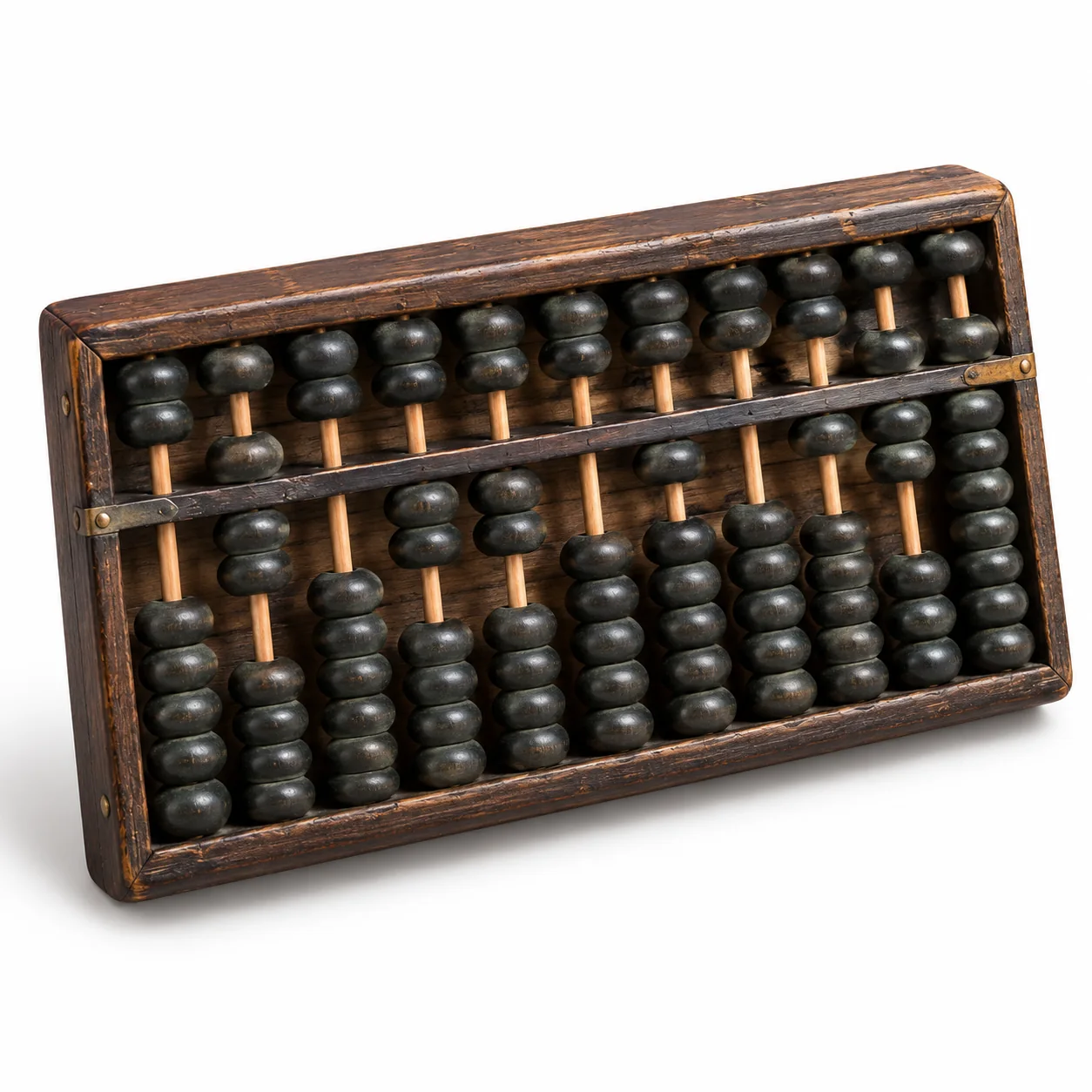
Traditionally uses more beads per rod and supports a broad range of arithmetic methods.
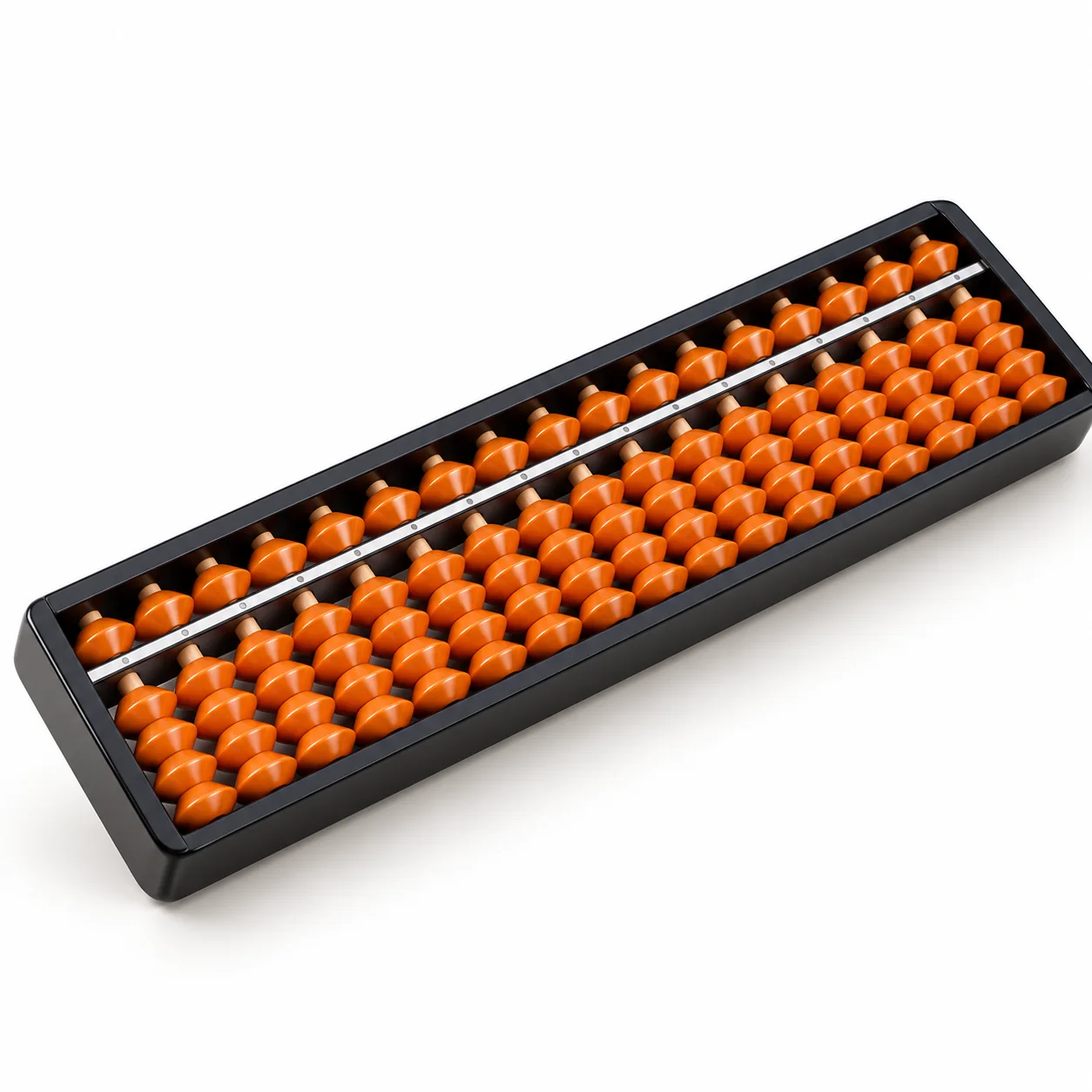
Uses a streamlined one-upper/four-lower bead arrangement that became the common modern teaching format.
The tool evolved because people wanted clearer and more efficient ways to represent numbers. Modern Abacus education keeps that same visual logic: children first calculate on the frame and later may learn to picture the frame mentally.
Try a live class and see how physical bead practice develops into structured mental calculation.